Tirzepatide
Tirzepatide is the generic drug name that identifies the active pharmaceutical ingredient. Eli Lilly holds patents on branded drugs, which includes Zepbound ® and Mounjaro ®. As this is a peptide-based drug, it becomes harder to replicate than small-molecule generics. Prescription drugs such as Zepbound and Mounjaro are game-changers in obesity and diabetes care, offering unmatched weight loss and metabolic benefits due to its dual-hormone action. While costly, its efficacy makes it a top choice for patients unresponsive to older medications. Ewing Weight Loss Clinic in Reno offers prescriptions for Tirzepatide-based weight loss drugs. Contact Us for details, or call: 775-322-3011.
- Tirzepatide works by suppressing appetite and enhancing fat metabolism.
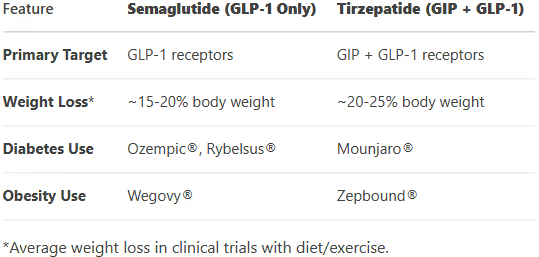
- Dual action GLP-1 + GIP receptor agonist, leading to even greater weight loss than Semaglutide.
- Average weight loss: 20-25% of body weight in clinical trials.
- Zepbound ® is FDA-approved for weight loss in 2023.
- Mounjaro ® (same drug, lower dose) is approved for type 2 diabetes.

Tirzepatide: A Detailed Overview
Tirzepatide is a dual-acting glucose-dependent insulinotropic polypeptide (GIP) and glucagon-like peptide-1 (GLP-1) receptor agonist. It is a first-in-class medication developed to treat type 2 diabetes (Mounjaro ®) and chronic obesity (Zepbound ®). It mimics the GLP-1 (glucagon-like peptide-1) receptor agonist hormone, which regulates:
- Appetite (reduces hunger and cravings).
- Blood sugar (increases insulin secretion).
- Gastric emptying (slows digestion, promoting fullness).
Additionally, GIP (glucose-dependent insulinotropic polypeptide) mimics hormones that act to:
- Enhances insulin sensitivity.
- May improve fat metabolism.
- Potentiates GLP-1’s weight loss effects.
Tirzepatide activates both GLP-1 and GIP receptors, enhancing insulin secretion, suppressing glucagon, slowing gastric emptying, and reducing appetite. As previously stated, brand names include:
- Zepbound ® – FDA-approved for weight management.
- Mounjaro ® – FDA-approved for type 2 diabetes.
Tirzepatide (Zepbound/Mounjaro) is a breakthrough obesity treatment offering sustainable, clinically significant weight loss with additional metabolic benefits. Its once-weekly subcutaneous injection and non-stimulant approach make it a preferred choice over older drugs, though cost and supply shortages remain challenges.

Uses for Tirzepatide
Weight Loss (Zepbound):
- Adults with BMI ≥ 30 (obesity).
- Adults with BMI ≥ 27 + weight-related conditions (e.g., hypertension, diabetes).
For Diabetes (Mounjaro):
- Type 2 diabetics needing improved glycemic control.
Off-Label Use:
- Some clinicians prescribe Mounjaro for weight loss before approving Zepbound.
When Was Tirzepatide Approved?
- Mounjaro (Diabetes): FDA-approved May 2022.
- Zepbound (Obesity): FDA-approved November 2023.
Access is limited by insurance coverage and cost (~$1,000+/month without insurance).
How is this Drug Administered?
Tirzepatide is available in the United States by prescription (Zepbound/Mounjaro). Injections are administered once-weekly.
Why is Tirzepatide Popular for Weight Loss?
Superior Weight Loss:
- Average 15-22% body weight loss vs. 10-15% with Wegovy ® (Semaglutide).
- In clinical trials, 20-25% of patients lost ≥25% of body weight.
Diabetes Benefits:
- Lowers HbA1c by 1.8-2.4% (better than most GLP-1 drugs).
Cardiometabolic Perks:
- Reduces blood pressure, inflammation, and fatty liver disease risk.
Additional Health Benefits:
- Lowers blood sugar, blood pressure, and cardiovascular risk.
- Reduces food noise (obsessive thoughts about eating).
Non-Stimulant: Unlike phentermine, it doesn’t cause jitteriness or addiction.

How Does Tirzepatide Work?
Mechanism of Action: Dual Hormone Action.
GLP-1 Effects:
- Suppresses appetite (brain receptors).
- Slows digestion (gastric emptying).
- Suppresses glucagon (reduces liver glucose output)
- Stimulates insulin release (lowers blood sugar).
GIP Effects:
- Enhances fat metabolism.
- May improve insulin sensitivity.
Dosing (Zepbound for Weight Loss):
- Starts at 2.5 mg/week, escalating every 4 weeks to 5 mg, 7.5 mg, 10 mg, 12.5 mg, or 15 mg.
- Maintenance dose: Typically 10-15 mg/week.
Side Effects:
- Common: Nausea, diarrhea, constipation, vomiting (usually temporary).
- Serious (Rare): Pancreatitis, gallbladder disease, thyroid tumor risk (contraindicated in those with medullary thyroid cancer or MEN-2 syndrome).
All medicines are for the approved indication for which they are authorized in their local country or region.
Comparison: Tirzepatide (Zepbound) vs. Semaglutide (Wegovy)
Both drugs belong to the incretin mimetics family, specifically the GLP-1 receptor agonist class, but with key differences: